The smallest minority on Earth is the individual. Those who deny individual rights cannot claim to be defenders of minorities. -Ayn Rand
So I was listening to Rush Limbaugh on the way back to work after my Quantum midterm. Honestly he is a much better/entertaining person when he has a Democrat in the White House. Regardless...
What was disturbing, was that Rush was channeling Ayn Rand. Yeah. Rand. Not that I disagree one iota, it's just odd. I don;t expect objectivist philosophy from Limbaugh. To Quote:
The smallest minority on earth is the individual. We are all different. We are all individuals. We are being told to sacrifice our individuality. We're being told we must assemble in other groups of victims. Well, not all of us because some of us are the victimizers. The smallest minority on earth is the individual and thus those who deny individual rights cannot claim to be defenders of minorities.
This is not the Rush I'm used to.
Wednesday, April 1, 2009

Wednesday, March 18, 2009
Too Big to Fail
Apparently some companies are "Too big to Fail", whatever that means. Apparently it means that the company is so large/employs so many people that it would be a disaster to the entire nation were the company to go under. Thus, "Too big to Fail"
Dr. Jerry E Pournelle has been bandying about a thesis for several months now. Now Jerry is a old school conservative, not a Libertarian, and is thus prone to solutions that are pragmatic. Us libertarians are naturally someone suspicious of pragmatic solutions to problems. We tend towards principled solutions and damn the consequences as it were.
They're Failing.
Let them Fail. (To paraphrase James T Kirk)
Pournelle's postulate is a simple one. No one is "Too big to Fail". If somehow you are TBTF, then you are "too big not to break up", using the various anti-trust acts.
One one hand, I have to admit it is appealing, though it does seem to go against all Libertarian principles.
On the other hand, there is a vague threat, never spoken out loud of course, that goes something along the lines of "Nice little economy you have here. Be a shame if something happened to it."
Well, if there is one thing that Libertarians and Conservatives should be able to agree on it is this: We do NOT negotiate with terrorists. Ever. Period, Dot, End of Story.
So certainly the "Too big to Fail" = "Big enough to break up" postulate is an appealing one. But a Libertarian instantly cringes at the thought, or does he?
The truth is Libertarians or Objectivists don't really like or trust corporations any more than they do the government. Oh certainly corporations haven't killed 200,000,000 of their own people over the last hundred years as governments have, but they do share one feature of government that Libertarians absolutely despise.
They are a way of abrogating individual responsibility to the collective.
Our heroes have names like "Rearden Steel" or Taggart Transcontinental, not ABC Holdings company Limited.
And that's the problem with these giant alphabet soup companies like AIG. There is nobody home. No one to say, this is my company, my problem, my responsibility. Instead responsibility is abrogated to the collective, and if everyone is responsible then, as we well know, nobody is responsible. And if no one is home, no one is harmed by breaking the company up either.
Yeah, it's pragmatic. Pragmatic at a Hobbesian level even. But I can live with that.
Friday, March 13, 2009

Monday, February 16, 2009
Friday, February 13, 2009
Iron Council - China Miéville
All right, I picked this book up because it had been nominated for the 2005 Hugo. Iron Sunrise, also nominated for the 2005 Hugo was brilliant.
Iron Council is not. Actually, it's just plain awful. It's impossible to figure out what is going on, who the different factions are, or why we should care about them. Worse, there is no explanation for the rules of how the planet works. It's a bad mishmash of fantasy and steampunk rather than science fiction.
I'm on page 110 or so, and only because it was the only book I had on a business trip.
Don't waste your time with this one.
Sunday, February 8, 2009
1968 by Joe Haldeman
Joe Haldeman is well known as a science fiction writer. The Forever War, remains an SF classic, having won the Hugo award, and serves as a fascinating counterpoint to Heinlein's Starship Troopers.
1968 is not a science fiction novel. It's a mainstream novel that, per the title, takes place in 1968.
I'd been looking for a copy for a while, and managed to pick up a used library copy on Amazon for all of $5 (with SuperSaver Shipping)
This is Spider's story. Spider is a young draftee in "The 'Nam", assigned to a combat engineering squadron. The story also follows the life of Beverly, Spider's girfriend, but it's Spider's story.
It's very tightly written, many "chapters" are a half page or less. While Spider is the protagonist, he's not a "hero" in the normal sense; things happen TO Spider, not because of him.
And in case you didn't figure it out reading The Forever War, Vietnam was NOT a fun place in 1968. Then again, neither was Chicago.
Ultimately, it's a slice of life story, and a rather sad one.
I recommend it if you get the chance to read it.
Thursday, February 5, 2009
Stimulus
Because WORDS MATTER.
There are three major schools of thought when it comes to Economics.
The Keynesians
The Chicago School (Friedman)
The Austrian School (Hayek)
They Keynesians think that government spending can be an economic stimulus. One stimulates the economy by getting money moving again. The phrase “velocity of money” comes from the Keynesians. The argument against this is that it is simply robbing “Peter to pay Paul”, it can appear to help in the short run, but it makes things worse in the long term. - (Many Democrats appear to be either devout Keynesians or Keynesian with Chicago leanings)
The Chicago school will say that government spending destroys just as many jobs as it creates. Paying 10,000 people to build roads means you have to generate enough taxes to put 10,000 other people out of work. If however, you pay those folks to build actual infrastructure, then you create jobs in the long term, as the infrastructure creates new opportunities and efficiencies.
The Chicago school basically says that building the Interstate Freeway system created zero net jobs directly. Remember, if you create a job through government spending you have to remove enough money from the private sector to destroy a job to pay for it. On the other hand, it did create jobs in the trucking industry, because the infrastructure left over afterward provides new opportunities and efficiencies. (Many Republicans, and a few Democrats follow this school)
The Austrians (think Ron Paul) say that basically all government spending makes the economy worse. Economic growth can only be caused when capital is accumulated so that it can be invested in either new business ventures or in capital equipment, since government spending must be paid for either through taxes or inflation, it prevents the accumulation of capitol, thus hurting the economy. (Libertarians, and a handful of Republicans follow this school)
So if one “knows” the stimulus will fail, then one should vote against it. It's not a matter of "wanting" or "not wanting" it to work. To an adherent of either the Chicago or Austrian school there is no “risk that they Keynesian approach might work”. To them, it is self evident that it has to fail, it can do nothing but fail.
It’s almost like the three schools form an orthogonal basis set. They can’t overlap by definition. Thus a person is either in one state or another, but can't be in two at the same time.
Now any sufficiently large system (and 3-million people counts as large) will display behavior that is a combination of basis states, so real economic behavior is bound to be a combination of all three schools of thought. Though I think history has shown that the Austrians are right on a lot of things.
I just realized that I have now written a quantum mechanical approach to economic theory. This probably means I need more sleep.
Friday, January 30, 2009
Fail
So let me get this straight.
Despite having a 4.00 GPA, and having completed 36+ units towards my Ph.D in physics...
Despite having endured the Physics Oral Exam, not once, but twice...
I have absolutely no freaking clue what it is they want, what is expected, or how to pass.
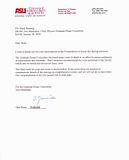
I suppose I shall have to file some sort of protest. But to whom, and how?
Despite having a 4.00 GPA, and having completed 36+ units towards my Ph.D in physics...
Despite having endured the Physics Oral Exam, not once, but twice...
I have absolutely no freaking clue what it is they want, what is expected, or how to pass.

I suppose I shall have to file some sort of protest. But to whom, and how?
Subscribe to:
Posts (Atom)


